Palantir just got EXPOSED for donating millions to Trump's ballroom.
Under Trump, the company has received up to $11B in DOD contracts.
SourceSee the post on XThe sourcing for this receipt is in the post's replies.
Federal law bars officials from working on matters that affect their own finances, unless they get a waiver.
Federal criminal law, at 18 U.S.C. 208, prohibits executive branch employees from participating personally and substantially in government matters in which they, their spouse, their minor children, or certain organizations they are tied to have a financial interest. A waiver lets an official take part anyway.
Under section 208(b)(1), the official who appointed the employee may grant a written waiver after deciding that the financial interest is not so substantial that it is likely to affect the integrity of the employee's work. Agencies consult the U.S. Office of Government Ethics, which collects copies of these waivers.
The president and vice president are not covered by section 208. Members of Congress are governed by their own chambers' ethics rules instead.
When an official works on a matter tied to their own holdings, we look for a waiver, report whether one was granted, and describe the interest it covers.
Recent Swamp Watch receipts on this subject.
Under Trump, the company has received up to $11B in DOD contracts.

He's asking Congress for a $1.5 trillion defense budget.

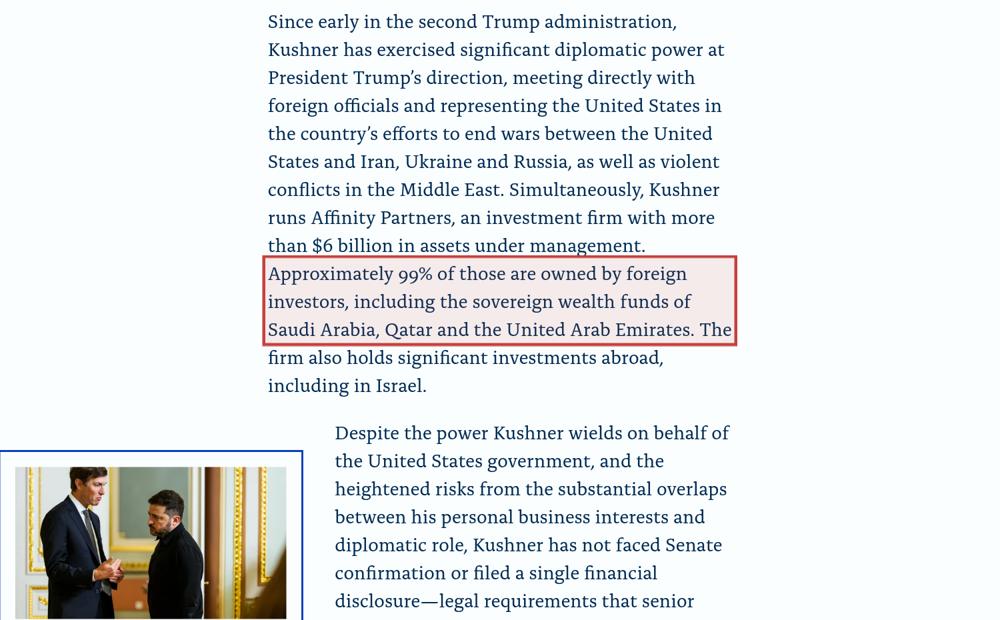
99% of his firm's assets belong to foreign investors, including Saudi Arabia and Qatar.